Declutter Paper Clutter Easily Without Losing Your Mind
If you have ever looked at the piles of paper and shuffled them around to deal with later, these tips to declutter paper clutter are for you.
Let’s be honest, how many times have you looked at that pile of papers on the kitchen counter, sighed, and promised yourself you’d “deal with it later”?
(And how many times did later never come?)
You’re not alone. Paper clutter sneaks into our homes quietly—through school folders, the mail, random receipts, and piles we meant to go through but never did. And suddenly it’s everywhere.
If you’re feeling overwhelmed and wondering where to even start, this guide will walk you through how to declutter paper clutter, know what paperwork to keep and for how long, and how to organize important documents at home in a way that feels simple, doable, and mom-life friendly.
The Real-Life Mess Behind the Paper
Before kids, I imagined I’d be one of those people with a filing system so perfect you could find anything in two seconds. Spoiler alert: I wasn’t.
Instead, I ended up with baskets overflowing with papers I was too afraid to toss “just in case.” The piles felt overwhelming. I didn’t know where to start. But eventually, I realized that holding on to all the paper wasn’t helping me—it was draining me.
So I decided to simplify.
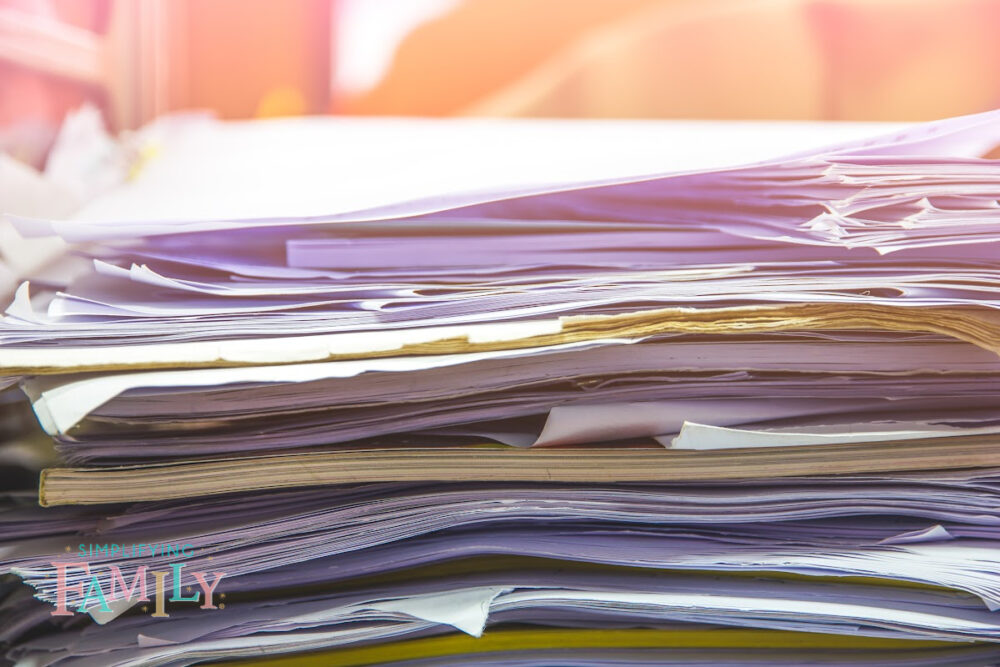
Declutter Paper Clutter: What to Keep, What to Toss (Without Regret)
If you’ve ever stood over a stack of paper wondering if you’ll regret throwing it out, this part’s for you. Here’s how I decide what stays and what goes.
Papers to Keep Long-Term
These are your “absolutely don’t toss” papers—the ones that are hard to replace and matter most:
- Loan paperwork and mortgage documents
- Birth certificates, Social Security cards, passports
- Deeds, titles, wills, and other legal documents
- Tax records, W-2s, 1099s (keep for at least 7 years)
- Active insurance policies
Short-Term Keepers When Decluttering Paper Clutter
These are the “hang on for now” kind of papers. I like to keep them for up to a year and then reevaluate:
- Monthly utility bills
- Bank and credit card statements (unless used for taxes)
- Receipts for big purchases (especially for warranties)
- School schedules and important reminders
Toss Without Guilt
Say goodbye to these paper piles and don’t look back:
- Junk mail and expired coupons
- Outdated flyers and catalogs
- Old event invites and notes you no longer need
- Random receipts that don’t serve a purpose anymore
Just make sure anything with personal information gets shredded first!

Create a “Forever File” for Must-Keep Documents
One of the most helpful things I did was create a Forever File—a designated space for all those hard-to-replace documents that absolutely must be kept safe.
This includes:
- Birth and marriage certificates
- Social Security cards
- Passports
- Property deeds and car titles
- Life insurance policies
- Legal documents (like custody agreements or wills)
To store paper documents long-term, I highly recommend using a (affiliate link) fireproof, waterproof safe. It’s not just about being organized—it’s about peace of mind, especially in an emergency.
Going Digital: A Blessing (With Boundaries)
When I started decluttering paper, I realized how much could be stored digitally instead. Going paperless with bills and statements helped eliminate piles of mail, and it gave me quick access to important info anytime I needed it.
But there’s a balance.
Some documents still need to be kept in hard copy—especially things like notarized paperwork, legal agreements, or documents that require original signatures. So now, I go digital when I can but hang on to originals when I need to.
Tips for digital storage:
- Set up organized folders on your computer (Banking, Bills, Taxes, etc.)
- Use cloud backup (like Google Drive or Dropbox)
- Save to an external hard drive regularly
- Password-protect sensitive files
Just don’t forget to do an occasional digital declutter, too!
How to Organize Important Documents at Home (Without Making It Complicated)
Here’s the system that finally worked for me (with affiliate links for easy shopping):
- One file box or drawer for long-term paper storage (like tax records or warranties)
- An accordion folder for current documents and short-term keepers
- A safe for those essential forever documents
- Digital folders for anything I don’t need to keep a physical copy of
The key is simplicity. If it’s too complicated, you won’t stick with it. Your system should make it easy to put things away, not just easy to take them out.
Disposing of Documents Safely
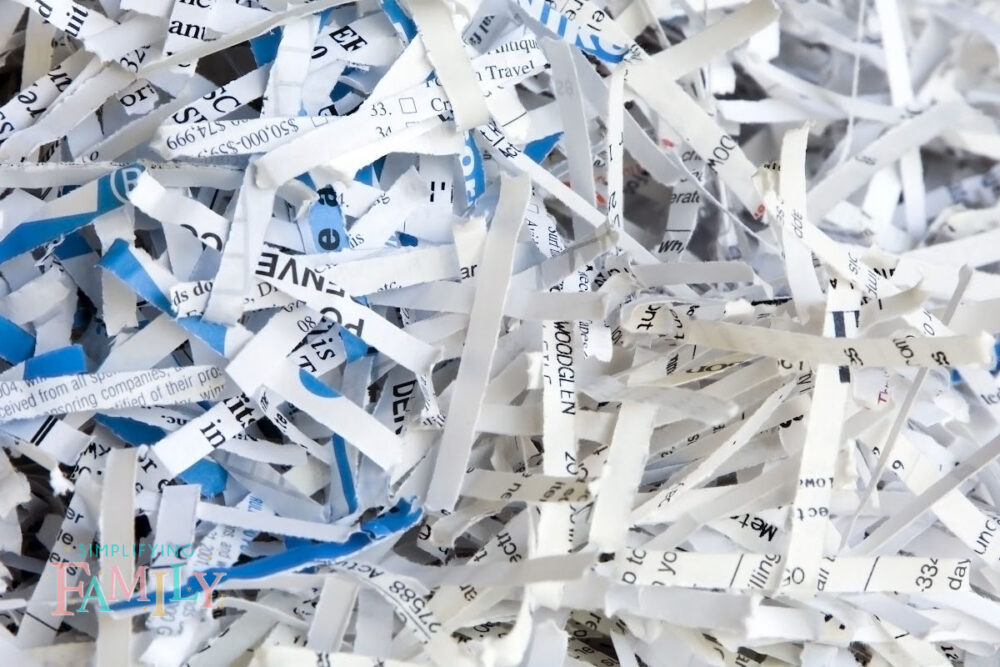
Throwing papers in the trash might seem faster, but in today’s world, identity theft is real, and you don’t want to take the risk.
Here’s what I do:
- Shred anything with personal info (name, address, account numbers, SSN)
- For large amounts, use a one-time shredding service (many local banks or city offices offer them seasonally)
- After shredding, recycle what you can
Safe disposal = peace of mind.

What About Electronic Statements?
With so many companies pushing digital statements, it’s easy to get overwhelmed by your inbox instead of your filing cabinet.
To keep it manageable:
- Unsubscribe from what you don’t need
- Save digital statements into monthly or category folders
- Back up everything regularly
- Set a reminder every quarter to review and delete old files
Bonus: many banks now charge for paper statements, so digital can be a money-saver too!
The Joy of Decluttering Your Documents
Honestly, I didn’t expect organizing my paper clutter to bring me so much relief, but it did. It wasn’t just about clearing off the counters. It was about clearing my mind.
Knowing exactly what paperwork to keep and for how long gave me the confidence to let go of what I didn’t need. And learning how to organize important documents in a way that fits my real life—not Pinterest perfection—was a total game changer.
This process helped me feel less buried, more in control, and way less stressed when I needed to find something important.
So if you’ve been staring at your paper piles, unsure where to start, let this be your gentle nudge: Start small. One paper. One pile. One file at a time.
You’ve got this. And it’s worth it.
Want more practical, peace-filled solutions to help you simplify life as a mom?
Come hang out with me at SimplifyingFamily.com—where less chaos means more room for what truly matters.
Pin It For Later